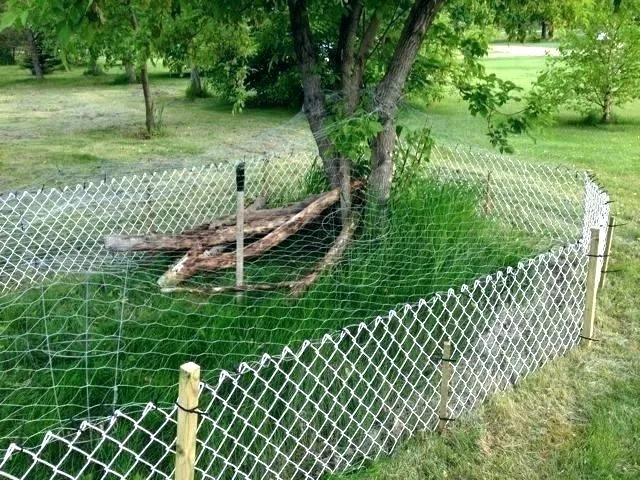
Yes. On a slope the fence is either racked, with rails that run parallel to the ground, or stepped, with level panels that drop at each post. A racked fence keeps the bottom edge closest to the ground.
Racked or stepped: which is better?
- Racked: rails tilt with the grade and pickets stay plumb. Good for mild and medium slopes and for keeping pets in.
- Stepped: panels stay level and step down post by post. Used on sharp drops and with rigid factory panels. Each step leaves a wedge of open space below.
- Built in place: for wood, each board is cut to meet the ground. This gives the neatest bottom line.
I have a dog that digs and a yard that drops. How do I avoid gaps?
Choose a racked or built-in-place fence and then seal the bottom edge. A treated board fixed along the ground, pickets trimmed to the grade, or welded wire buried under the fence line all stop a digger.
My yard is steep and rocky and two companies turned the job down. Who does this?
A crew that is set up for stone. Providence is built on hills, from College Hill and Smith Hill to Mount Pleasant, and the soil across northern Rhode Island is glacial till full of cobbles and boulders, with ledge near the surface in places. A boulder may be dug out or the post shifted. On solid rock the hole is cored or the post is pinned. It is slower and costs more than open soil. We walk the line before we price it.
Do installers dig by hand or with a machine?
Both, depending on the spot. A power auger is quickest in clear ground. Along foundations, beside marked utility lines, among roots and in the narrow side yards common here, holes are dug by hand.
For a real price on your own yard, book a free on-site estimate. Call (401) 356-3395 or text us a photo of the fence line.